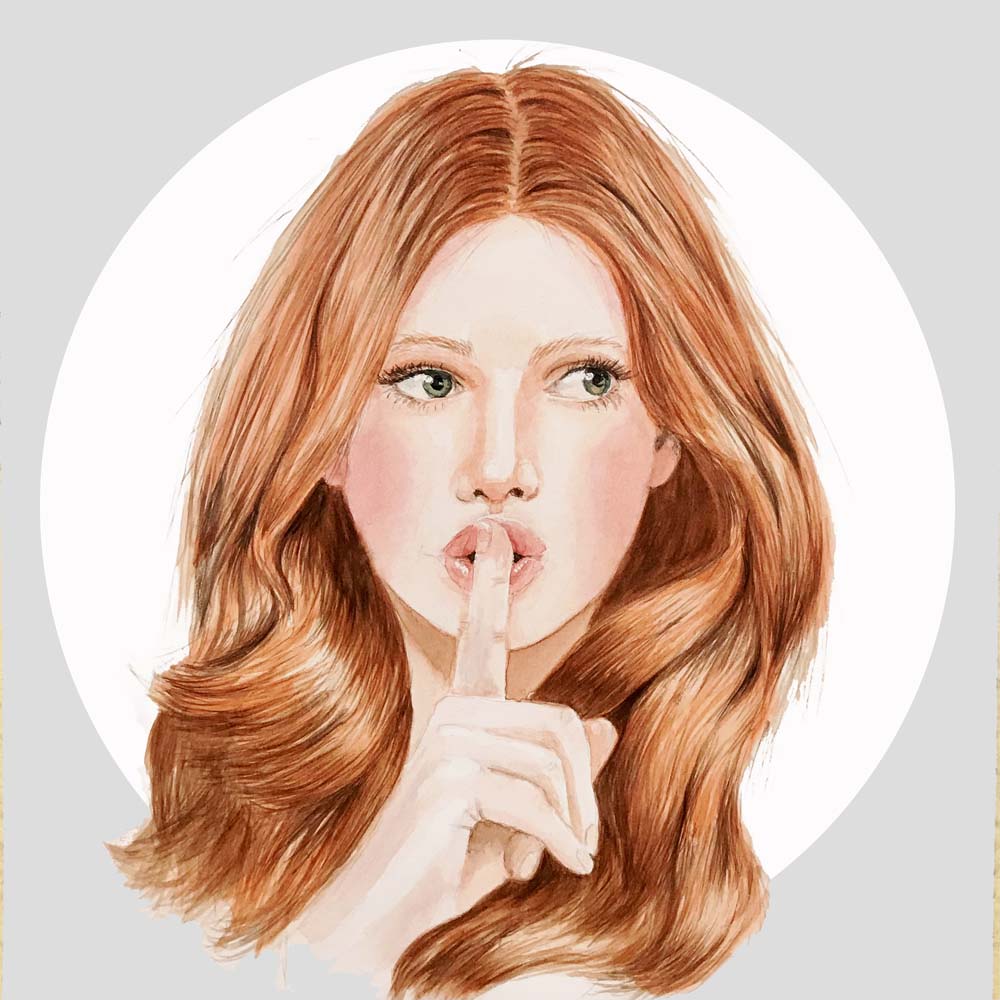
Charcoal. One of the oldest mediums for making art. It can be seen in cave drawings, and then through the ages, so many of the most famous artists that are household names have utilised it in one way or another. Below are a few notes of the whys and wherefores of charcoal. Such an immediate and flexible medium and overall, available to almost everyone and incredibly economical.
Main types of Charcoal
There are two main types of charcoal that are used in art; Willow and vine. Willow is the darker and more velvety and soft, where vine is slightly more hardwearing but is also lighter in appearance. The wood is heated in a kiln which has no oxygen, and turns the wood into black sticks. When used they will leave dark marks that can be smudged, blended or erased. It has to be said that while a beautiful medium, it can also be very messy ;-).
Compressed charcoal
Similar to above, but then ground into a powder and mixed with a binder, like wax or gum arabic. The result is much darker marks, but also not as easy to erase.
Charcoal Power
As above but left in the powder stage, which makes it a very useful item to have in the charcoal arsenal. You an either pop your finger in the powder and draw that way or dip a brush or other implement into the powder. It gives a much paler result, and can sometimes be not very stable but is very useful to cover larger areas. I use it to cover the main area of a face or animal and then go in with other types of charcoal for the details.
Charcoal pencils
Again as above but encased in wood as a pencil. The benefit is that you can make very dark marks and can sharpen your pencil to a point. which is great for details.
There are also solid woodless charcoal pencils, which have a coating which makes them much cleaner to use. They come in soft,medium or dark versions (as do the wooded charcoal pencils). They are lovely to use, can make incredibly dark marks but not easily lifted or erased.
Liquid Charcoal
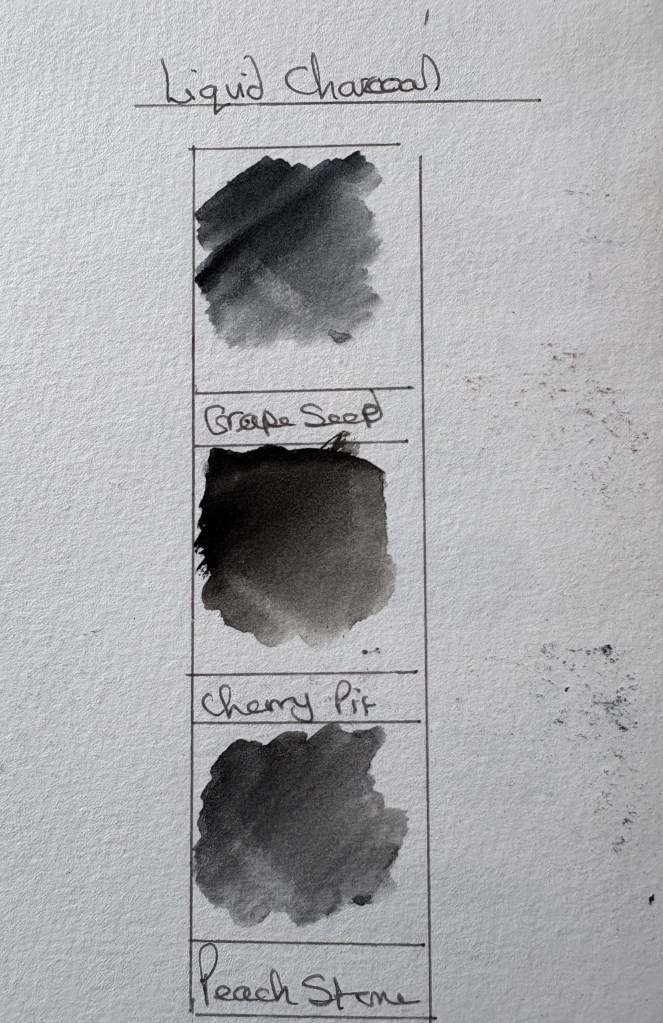
One of my favourites. Liquid charcoal is ground powder charcoal which has been mixed into a paste with something like gum arabic. It can be diluted with water and then used in pretty much the same way as watercolour. The one main difference is where watercolour can be staining and you may not be able to blot the colour away, with liquid charcoal it is much easier to amend a mark. it’s easy to layer, and do washes, as well as using it almost neat to get really deep darks. I have Schmincke liquid charcoal tubes – which comes in Grape seed black (bluish tint), Cherry pit black (brownish tint)or Peach stone black (blacker than the other two).
Why do artists use charcoal?
Putting cost aside, as that is for some a key consideration, when it comes to artistic reasons, charcoal is an immediate tool, no mixing, just very straightforward. It also gives very beautiful results, the blacks are deep and rich and of a type that is not so easy to achieve with many other mediums such as water colour or graphite. With watercolour one would need to reapply quite a few times to get the same depth and with most graphite, you can get quite a shiny surface, whereas with charcoal, the results are deep black and non reflective. In comparing it to ink drawing, the blacks are very very similar, but with charcoal you can amend, blend or erase, that’s no really possible with ink.
Its immediacy is very attractive. I go to life drawing sessions. At the sessions, it starts with 2 minute poses, then 5 minute poses and goes up incrementally. As you can imagine, charcoal is favoured by many of the artists there, as being able to capture the poses wth blending and shadows much easier than pretty much any other medium.
The ease of amending what you have put down is easy and quick. Either a tissue or kneadable eraser can remove the mark easily.
Why it is so good to try
There are many benefits to using charcoal. As previously mentioned, it is very economical. A quick check on Amazon and for ordinary sticks of charcoal, a packet ranges from £4.00 to whatever you want pay. Blenders are cheap, again ranging from tortillions are about £3.50 plus. there is a great range of blenders to choose from. Tortillions (blending stumps), sponge blenders, brushes, tissue or your finger.
Paper is the next consideration. It is generally recommended to use heavier papers to take into account the erasing and blending. Different artists like different textures. I have seen very smooth paper used as well as very textured paper, it really is a personal choice. It would depend on whether one wants to use it for quick sketches or for detailed pieces which will probably experience a lot of corrections.
Pros and Cons
- It is a cheap medium to use.
- It is very easy to use
- It gives stunning darks
- Very easy to blend
- Convey gestural marks easily and quickly.
Cons
- Its easy to smudge a mark by mistake.
- Its very easy to lose the charcoal off the paper unless behind glass or fixed in some way. (Fixative or hairspray generally recommended.)
- It is very messy
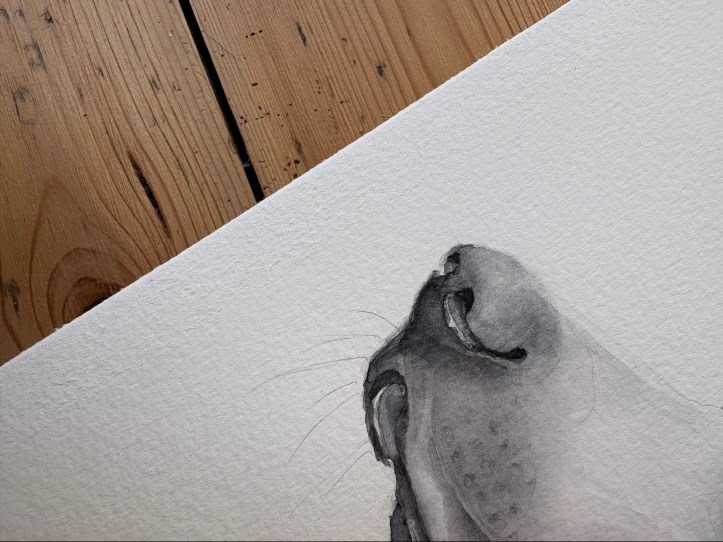
As an experiment, I painted the dog below in liquid charcoal. As you can see, its very similar in appearance to a tonal study in watercolour.
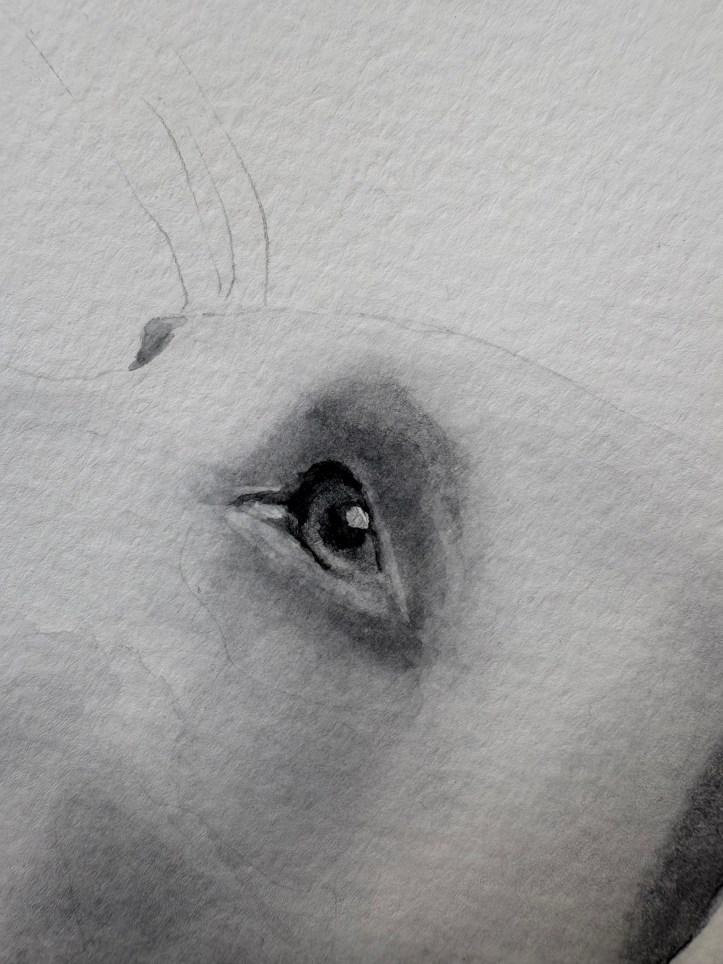
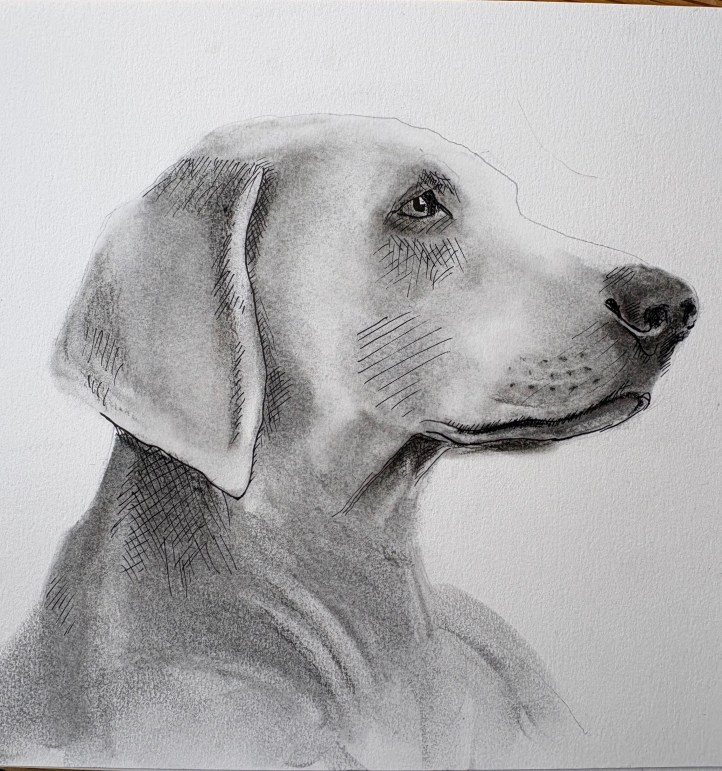
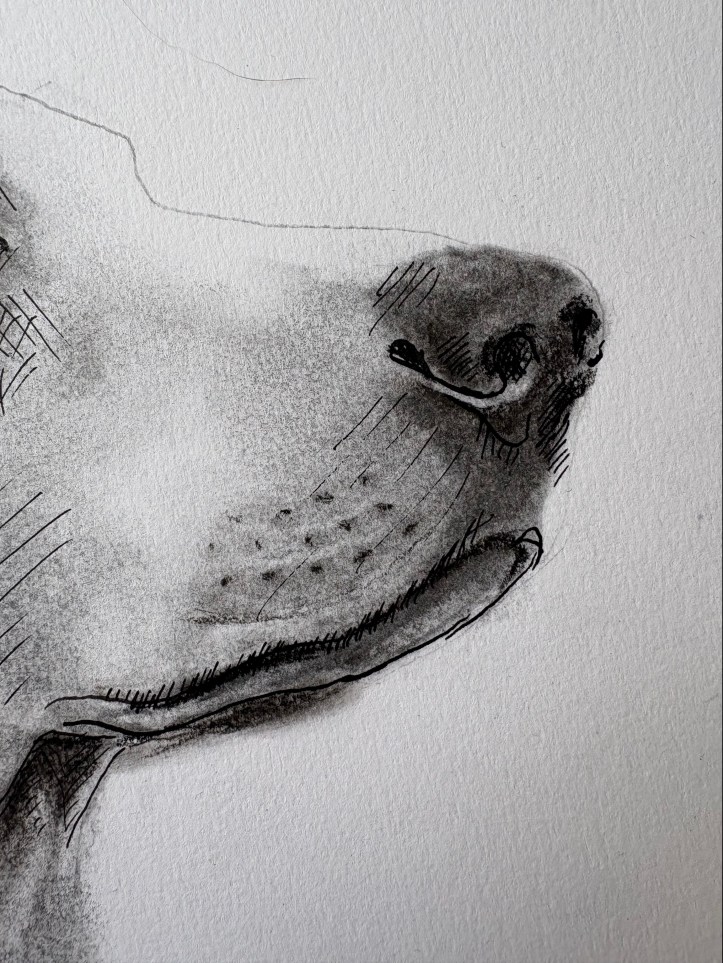
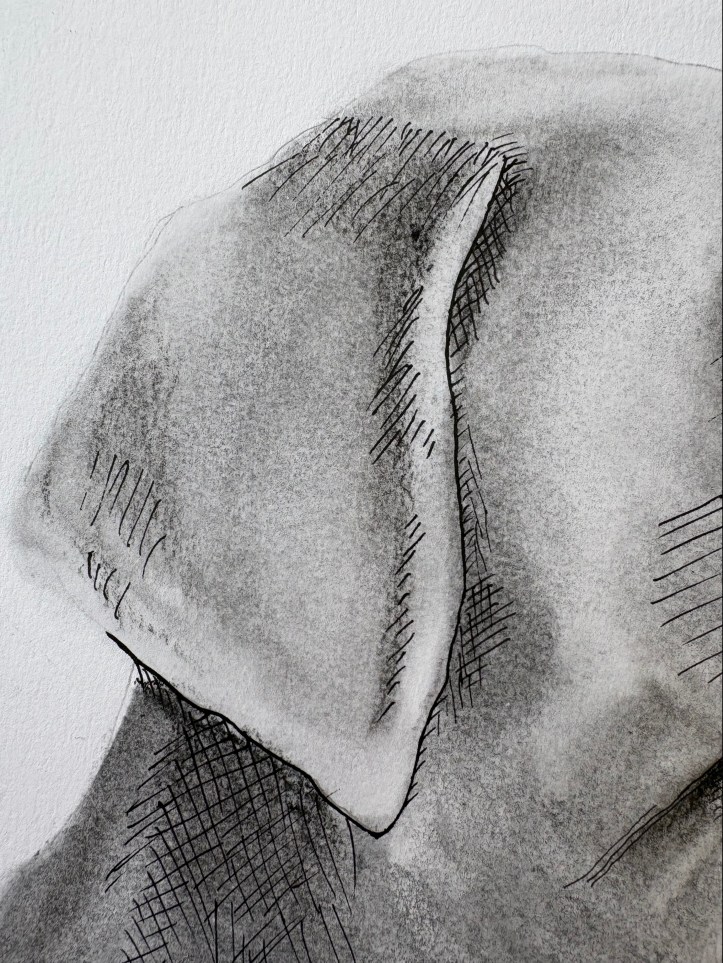
And possibly not thinking it through properly, I decided to try and do a charcoal and ink picture. If nothing else (and there is little else lol) you can see the difference between the blacks of the ink and the charcoal.
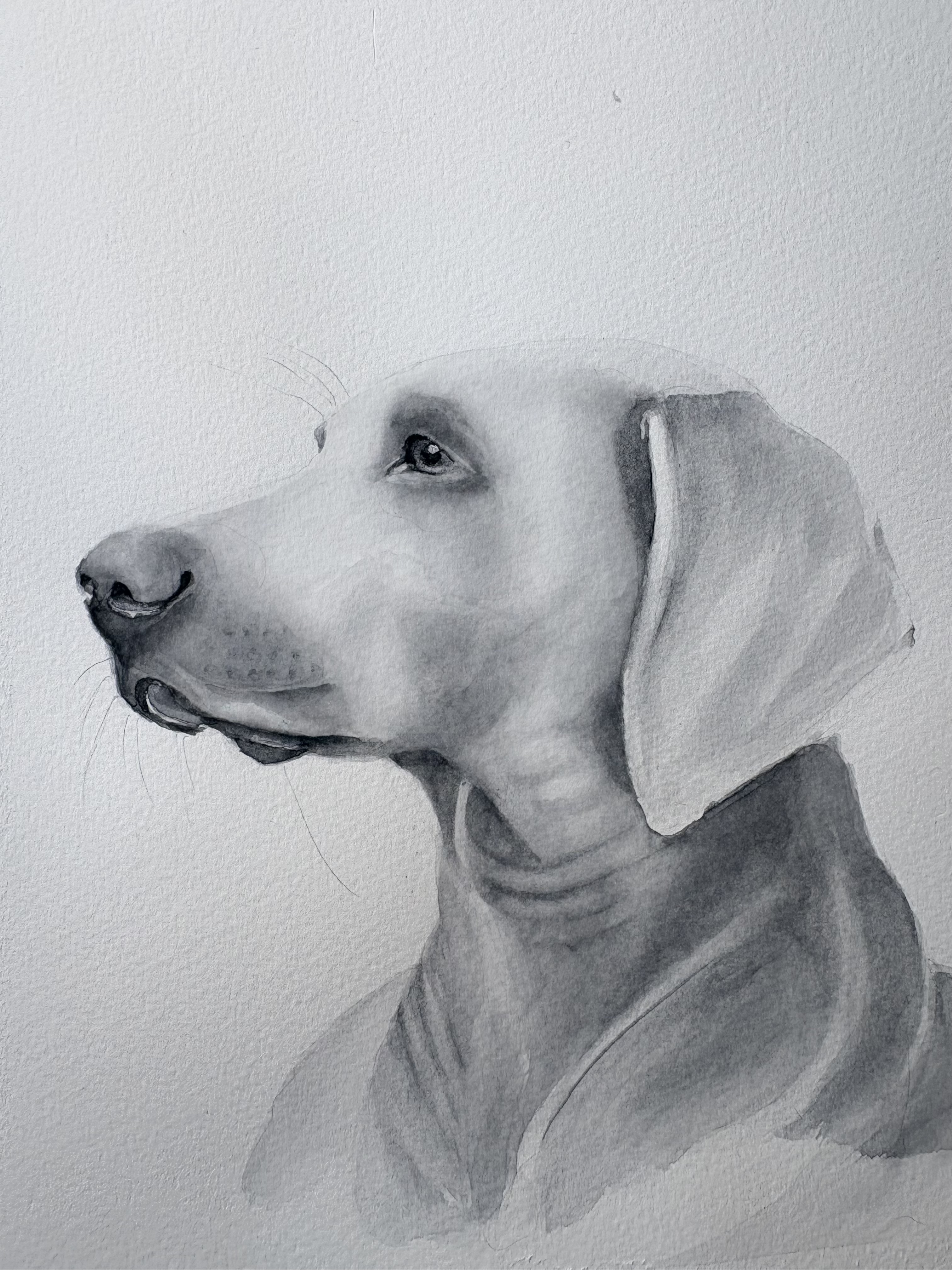 Dog in Schmincke Liquid Charcoal
So, here ends my experiments with charcoal for the time being. I’d love to hear your experience. Until next time…

